

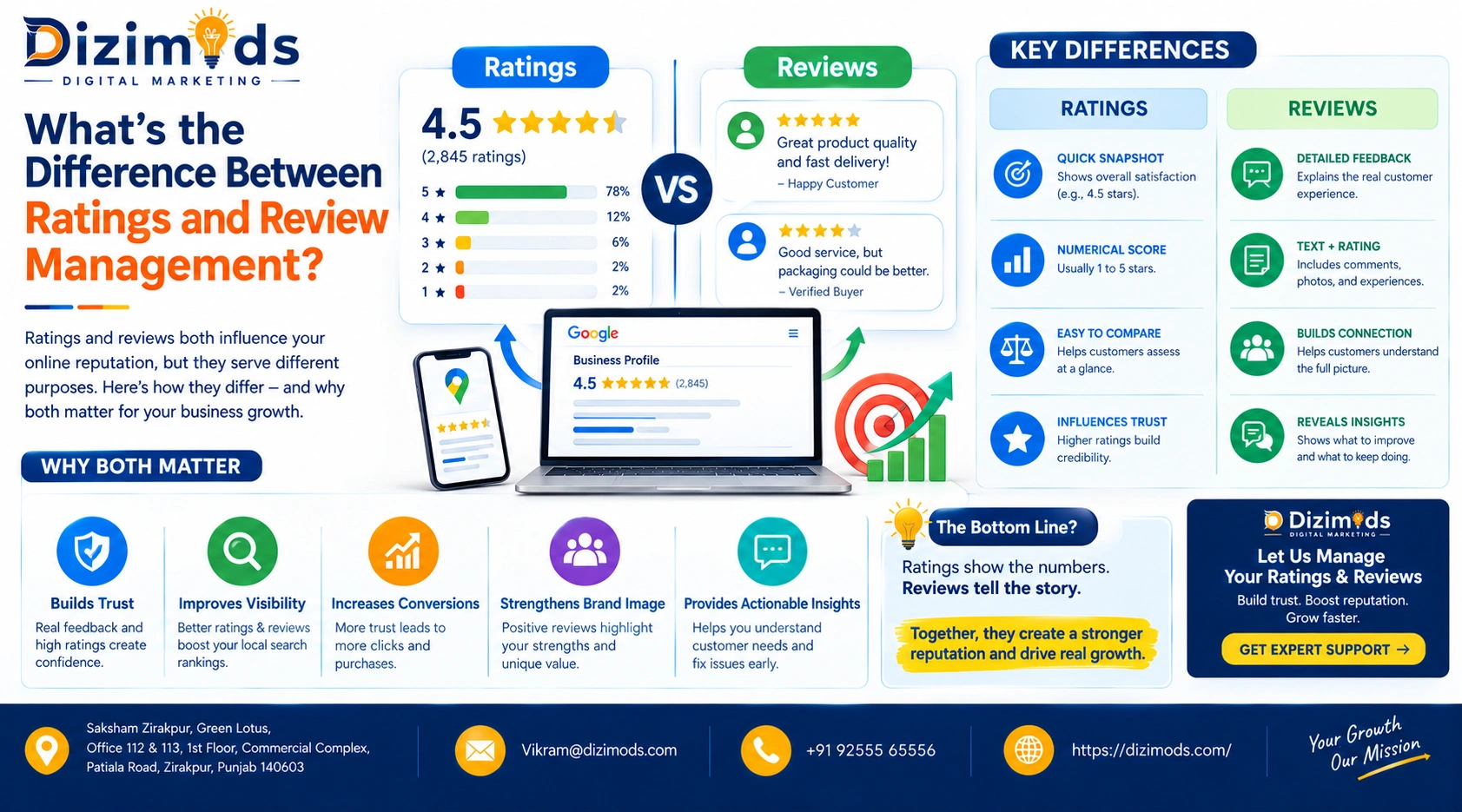
When shopping online, most customers rely on ratings and reviews Management before making a purchase decision. Whether someone is buying a product on Amazon, Flipkart, Meesho, Myntra or any ecommerce platform, customer feedback plays a major role in building trust and influencing buying behavior. However, many people use the terms rating and reviews interchangeably, even though they are not exactly the same.
Understanding the difference between reviews and ratings can help businesses improve their online reputation, attract more customers and increase sales. In this guide, we’ll explain everything you need to know about rating and reviews and why both are essential for ecommerce success.
Read More Blog: Best Meesho Review Service to Increase Seller Ratings
What Are Ratings?
A rating is a numerical score that customers give to a product, service or business. Ratings are usually represented through stars, with most platforms using a 1-to-5-star system.
For example:
- 5 Stars = Excellent
- 4 Stars = Very Good
- 3 Stars = Average
- 2 Stars = Poor
- 1 Star = Very Poor
Ratings provide a quick overview of customer satisfaction. When shoppers browse products online, they often look at the star rating first before reading any detailed feedback.
Because ratings are simple and easy to leave, businesses often receive more ratings than written reviews. A strong average rating can significantly improve customer confidence and encourage purchases.
What Are Reviews?
A review is a detailed written opinion shared by a customer about their experience with a product or service. Unlike ratings, reviews provide context and explain why a customer feels a certain way.
A review may include:
- Product quality
- Shipping experience
- Customer service feedback
- Product performance
- Recommendations for other buyers
Reviews help potential customers understand the strengths and weaknesses of a product before making a purchase decision.
For example:
Rating: ★★★★★
Review: “The product arrived on time, the packaging was excellent and the quality exceeded my expectations. Highly recommended.”
In this example, the rating shows satisfaction, while the review explains the reason behind it.
Read More Blog: Myntra Seller Review Management: How to Identify Trusted Sellers on Myntra
The Key Difference Between Ratings and Reviews Management

The primary difference between ratings and reviews is the level of detail provided.
Ratings | Reviews |
Numerical score | Written feedback |
Quick to leave | Requires more effort |
Gives overall satisfaction level | Provides detailed customer experience |
Easy to compare | Helps understand product strengths and weaknesses |
Usually represented by stars | Usually represented by text comments |
Both review and ratings work together to help customers make informed purchasing decisions.
Why Are Ratings Important?
Ratings play a crucial role in ecommerce success because they offer instant credibility.
1. Quick Decision-Making
Most online shoppers check ratings before reading reviews. A high rating immediately creates a positive impression.
2. Increased Visibility
Many ecommerce marketplaces prioritize products with better reviews ratings and higher customer satisfaction scores.
3. Improved Conversion Rates
Products with strong ratings generally receive more clicks and conversions than products with lower ratings.
4. Better Customer Trust
Customers are more likely to trust products that have consistently high ratings from previous buyers.
Why Are Reviews Important?
While ratings provide a quick snapshot, reviews provide valuable details.
1. Detailed Product Insights
Reviews explain what customers liked or disliked about a product.
2. Enhanced Customer Confidence
3. Valuable Business Feedback
4. Stronger Brand Reputation
How Ratings and Reviews Management Work Together
Successful ecommerce businesses understand that both ratings reviews Management and detailed customer feedback are important.
Imagine two products:
Product A
- Rating: 4.8 Stars
- 500 Reviews
Product B
- Rating: 4.8 Stars
- 10 Reviews
Most customers will trust Product A more because it has a larger number of reviews supporting its rating.
Similarly, a product with a high rating but no written reviews may appear less trustworthy than a product with both strong ratings and detailed customer feedback.
That’s why businesses should focus on collecting both reviews and ratings from satisfied customers.
How Ratings and Reviews Management Impact SEO

Customer-generated content plays a major role in search engine optimization.
Improved Search Visibility
Search engines value fresh and relevant content. Reviews regularly add new content to product pages, helping improve rankings.
Increased Click-Through Rates
Products displaying star ratings often attract more clicks in search results.
Better User Engagement
Reviews keep users on pages longer, increasing engagement signals that search engines may consider.
Enhanced Trust Signals
Positive rating review management patterns demonstrate customer satisfaction and can contribute to stronger online credibility.
Read More Blog: Meesho Rating Management Increase Guide 2026—Boost Sales Fast
Best Practices for Collecting More Ratings and Reviews Management
If you want to improve your online reputation, consider these strategies:
Ask Customers for Feedback
Send follow-up emails after purchases encouraging customers to leave feedback.
Simplify the Review Process
Make it easy for customers to submit both ratings and reviews.
Respond to Customer Feedback
Engage with both positive and negative reviews professionally.
Deliver Excellent Customer Experiences
Satisfied customers are more likely to leave positive feedback.
Use Automated Review Requests
Review management tools can help consistently generate customer feedback.
Final Thoughts
Understanding the difference between rating and reviews is essential for every ecommerce business. Ratings provide a quick measure of customer satisfaction, while reviews offer detailed insights into customer experiences. Together, ratings and reviews help build trust, improve conversion rates, enhance SEO performance and strengthen brand reputation.
For ecommerce sellers, focusing on both reviews and ratings is one of the most effective ways to increase visibility and drive long-term growth. By encouraging authentic customer feedback and maintaining high service standards, businesses can leverage reviews ratings to stand out in a competitive marketplace.
At Dizimods, we help ecommerce brands improve their online presence through reputation management, marketplace optimization, Ecommerce SEO and digital marketing strategies designed to maximize growth and customer trust.
Frequently Asked Questions (FAQs)
Ratings and reviews management are both forms of customer feedback, but they serve different purposes. Ratings are numerical scores, usually represented by stars, while reviews are written comments that explain a customer's experience in detail. Together, reviews and ratings help shoppers make informed buying decisions.
Ratings and reviews management build trust, improve product credibility and influence purchasing decisions. Products with positive reviews ratings management often receive higher visibility on ecommerce platforms and generate more sales compared to products with little or no customer feedback.
Both are important. Ratings provide a quick overview of customer satisfaction, while reviews offer detailed insights. A strong combination of review and ratings management helps businesses attract more customers and establish credibility online.
Customer-generated content such as ratings, reviews, and management can improve SEO by adding fresh content to product pages, increasing user engagement, and improving click-through rates. Search engines often view positive customer feedback as a trust signal.
Businesses can encourage customers to leave feedback through follow-up emails, review request campaigns, excellent customer service and simplified feedback forms. Consistently delivering quality products and services is the best way to generate positive rating review feedback naturally.
Result-Driven SEO Agency Backed by Experience
Built for brands that want long-term growth – not shortcuts.