
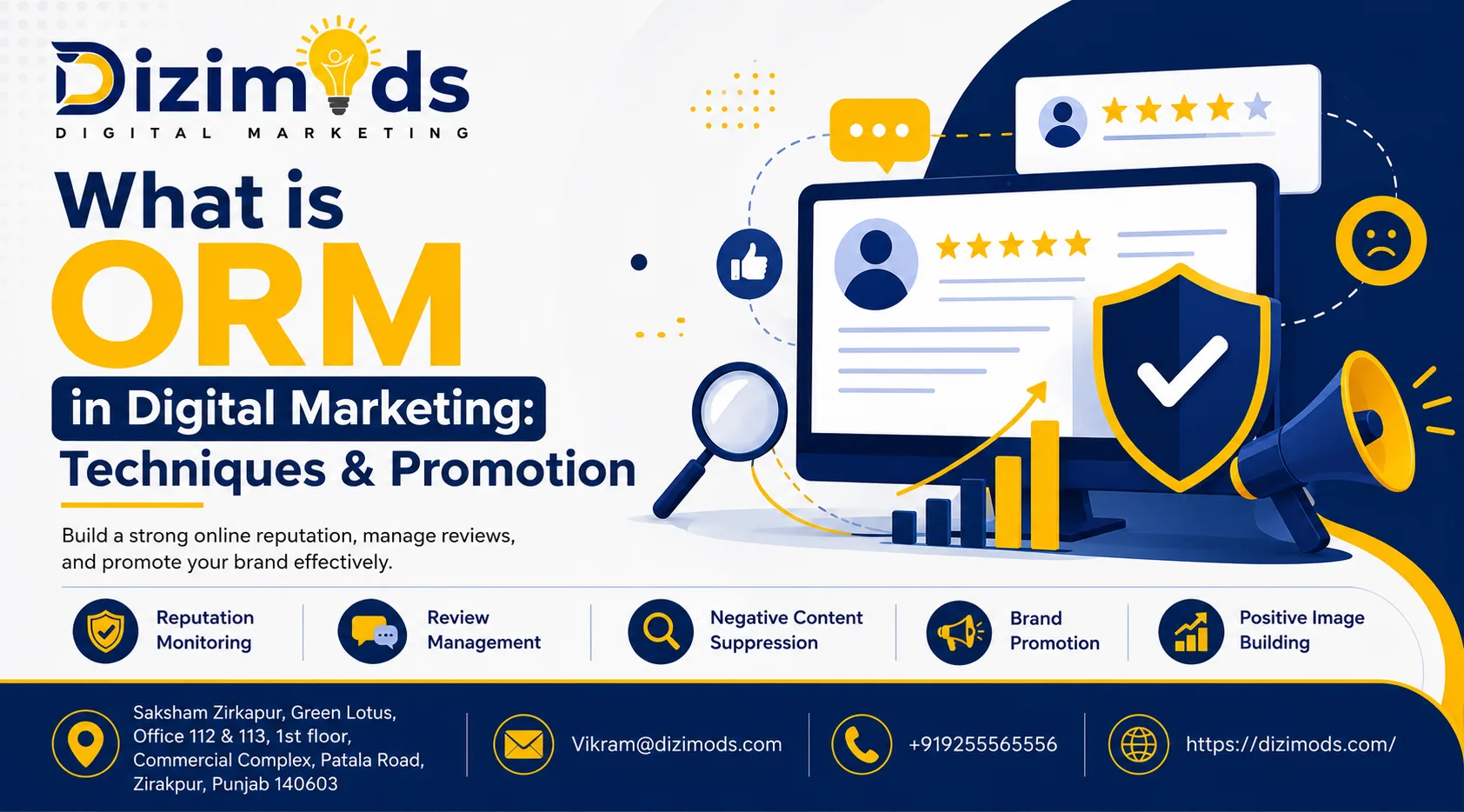
ORM in Digital Marketing
In today’s digital-first marketplace, a brand’s online reputation can directly impact its growth and success. Customers rely heavily on online reviews, social media discussions and search engine results before making purchasing decisions. A positive digital presence builds trust, while negative feedback left unmanaged can influence customer perception and reduce conversions. This is where ORM in marketing becomes an essential strategy for businesses looking to maintain a strong online presence and build customer confidence.
At Dizimods, a trusted reputation management agency, we help businesses monitor, protect and strengthen their online reputations through data-driven online reputation management in digital marketing solutions. From managing customer reviews and tracking brand mentions to improving search visibility and responding to customer feedback, our ORM services are designed to enhance brand credibility and customer trust. In this blog, we’ll explore what ORM is, why it matters for modern businesses, the key strategies involved and how Dizimods can help you build a strong and lasting online reputation that drives long-term business growth.
What Does ORM Stand For?

ORM (Online Reputation Management) is the process of monitoring and improving how your business is perceived online. It involves managing customer reviews, social media mentions, search engine results and other digital interactions to maintain a positive brand image. As an online reputation management business, ORM helps brands build trust and strengthen their digital presence.
The goal of ORM is to build credibility and ensure potential customers find positive information about your business online. This includes responding to feedback, encouraging positive reviews and promoting valuable brand content that enhances your reputation.
At Dizimods, a trusted online reputation management company and leading ORM company India, we help businesses protect and enhance their online reputation through strategic review management, brand monitoring and reputation-building solutions. A strong ORM strategy not only improves customer confidence but also helps attract new customers and drive long-term business growth.
The Importance of ORM in Digital Marketing
In the age of instant information and social media, consumers can access vast amounts of information before making purchasing decisions. A few negative reviews or viral complaints can significantly impact a brand’s reputation, affecting sales, partnerships and customer trust. This is why investing in professional online reputation services has become essential for modern businesses.
Through effective online reputation management services, businesses can monitor brand mentions, respond to customer feedback, manage online sentiment and address potential reputation risks before they escalate. A proactive ORM strategy helps safeguard brand credibility, strengthen customer relationships and align public perception with business goals.
Key reasons why ORM matters include the following:
- Customer Trust: A strong reputation builds trust and influences purchasing decisions.
- Crisis Prevention: Quickly addressing negative feedback prevents escalation.
- Search Engine Impact: Positive content ranks higher, pushing down negative search results.
- Competitive Advantage: Brands with better online reputations often outperform competitors.
- Employee Attraction: Potential hires research company reputations before applying.
How ORM Works
ORM operates through continuous monitoring of online channels such as Instagram, Facebook, X (Twitter), YouTube, forums, blogs and review platforms’ coverage areas compared in Instagram vs Facebook, where brands assess platform-specific sentiment, engagement dynamics and audience behavior to tailor reputation strategies that resonate across visual-first and community-driven ecosystems.
- Search engine results (Google, Bing)
- Social media platforms (Facebook, Twitter, Instagram, LinkedIn)
- Review sites (Yelp, Trustpilot, Google Reviews)
- Forums and blogs
By tracking brand mentions, customer feedback and conversations, businesses can detect issues early, respond appropriately and promote positive stories.
The process involves:
- Listening: Using tools to gather data on brand mentions.
- Analyzing: Assessing sentiment and identifying patterns.
- Engaging: Responding to feedback professionally.
- Improving: Adjusting business practices based on insights.
- Promoting: Sharing positive content and encouraging reviews.
Core Components of Online Reputation Management

Online Reputation Management (ORM) helps businesses maintain a positive online image by monitoring brand mentions, managing customer reviews and engaging with audiences across digital platforms. As an essential part of ORM in digital marketing, it involves responding to feedback, promoting positive content and using SEO strategies to improve brand visibility in search results.
At Dizimods, we help businesses build trust and credibility through proactive ORM digital marketing strategies. By tracking online conversations, managing reviews and creating valuable content, we ensure your brand maintains a strong and positive digital presence that attracts customers, enhances reputation and supports long-term business growth.
ORM vs Reputation Management
Online Reputation Management (ORM) focuses specifically on how a brand is perceived across digital platforms, including search engines, social media, review websites and online communities. As a key component of ORM in digital marketing, it helps businesses monitor, manage and improve their online presence.
While reputation management is a broader concept that includes public relations and customer service, ORM digital marketing focuses on managing online reviews, monitoring customer sentiment and improving digital visibility. Through professional online reputation services and online reputation management services, businesses can build trust, protect their brand image and maintain a positive reputation online.
At Dizimods, we use strategic ORM techniques to help businesses strengthen their online presence, engage with customers and safeguard their reputation in an increasingly competitive digital marketplace.
Strategies for Effective Online Reputation Management
- Active Listening and Monitoring: Use tools like Google Alerts, Mention or Brandwatch to stay updated.
- Quick and Transparent Responses: Respond promptly to both positive and negative feedback with sincerity.
- Encourage Positive Reviews: Create programs or incentives for happy customers to share experiences online.
- Content Marketing: Develop blog posts, testimonials and case studies that highlight your strengths.
- Social Media Engagement: Maintain an active presence and foster community trust.
- SEO for Reputation: Optimize content so that favorable pages rank higher in search results.
- Crisis Management Plan: Have a predefined process for handling PR crises or viral negativity.
Benefits of ORM for Businesses
- Enhanced Brand Image: Builds a trustworthy and positive online presence.
- Improved Customer Loyalty: Customers appreciate transparent communication.
- Higher Conversion Rates: A positive reputation influences buying decisions a dynamic often undermined by Black Hat SEO, where unethical tactics like keyword stuffing and link manipulation can mislead users and erode brand trust.
- Reduced Negative Impact: Early detection minimizes damage from negative content.
- Better Search Engine Rankings: Favorable content outranks harmful or irrelevant pages.
- Competitive Edge: A strong reputation attracts partnerships and talent.
Common Challenges in ORM
- Volume of Data: Managing large amounts of brand mentions can be overwhelming.
- Speed of Response: Digital conversations happen fast, requiring quick action.
- Fake Reviews: Identifying and managing fraudulent content is difficult.
- Negative Content Permanence: Removing or suppressing harmful content is often complicated.
- Resource Allocation: Small businesses may lack dedicated ORM teams.
- Maintaining Authenticity: Overly polished responses can come across as insincere.
Real-World Examples of ORM Success

Many leading brands have successfully used ORM in digital marketing to strengthen customer trust and protect their brand image through effective online reputation management companies.
Domino’s Pizza is a well-known example. After facing a reputation crisis from a viral video, the company responded transparently, improved its processes and actively engaged with customers. This proactive approach helped rebuild trust and restore its reputation.
Tesla has also leveraged ORM digital marketing strategies by maintaining active communication with customers through social media, sharing user experiences and addressing concerns directly. This has helped the company build a loyal community and strengthen its brand image.
These examples show that effective ORM is not just about managing negative feedback—it’s about building trust, maintaining transparency and fostering long-term customer relationships. Through professional online reputation services, businesses can protect their brand image and enhance customer confidence.
At Dizimods, we provide comprehensive online reputation management services that help businesses implement proven ORM strategies, protect their online presence and build a strong, trustworthy brand reputation.
How to Build a Successful ORM Strategy
- Step 1: Define Your Goals: Understand what you want to achieve, such as brand awareness, lead generation or crisis prevention.
- Step 2: Identify Key Platforms: Focus on channels your customers frequent most.
- Step 3: Set Up Monitoring Systems: Implement tools for continuous listening.
- Step 4: Develop Response Protocols: Create guidelines for tone, timing and escalation.
- Step 5: Produce Positive Content: Publish stories, testimonials and useful information regularly.
- Step 6: Train Your Team: Ensure staff understand ORM importance and protocols.
- Step 7: Review and Adapt: Analyze performance and refine your approach continuously.
Future Trends in ORM
The future of ORM in marketing is being shaped by AI and machine learning technologies. Advanced tools can now monitor brand mentions, analyze customer sentiment and generate faster, more personalized responses across multiple platforms.
As businesses increasingly rely on data-driven insights, AI-powered ORM solutions help improve customer engagement, strengthen brand reputation and streamline reputation management efforts. Leading businesses often partner with a trusted reputation management agency to leverage these technologies and stay ahead of potential reputation challenges.
At Dizimods, a growing ORM company India, we combine modern ORM strategies with emerging technologies to help businesses build customer trust, protect their online reputation and maintain a strong digital presence in an evolving marketplace.
Result-Driven SEO Agency Backed by Experience
Built for brands that want long-term growth – not shortcuts.