

Table of Contents
Amazon is one of the most competitive marketplaces for online sellers. A great product alone is not always enough to attract customers and generate sales. Your product listing must communicate value, answer customer questions, build trust, and help shoppers make informed purchasing decisions. This is where Amazon A+ Content becomes an important part of your eCommerce strategy.
With the right Amazon A+ content modules, sellers can transform standard product descriptions into visually engaging product detail pages. These modules combine images, text, comparison charts, lifestyle photography, and product information to present a product more effectively.
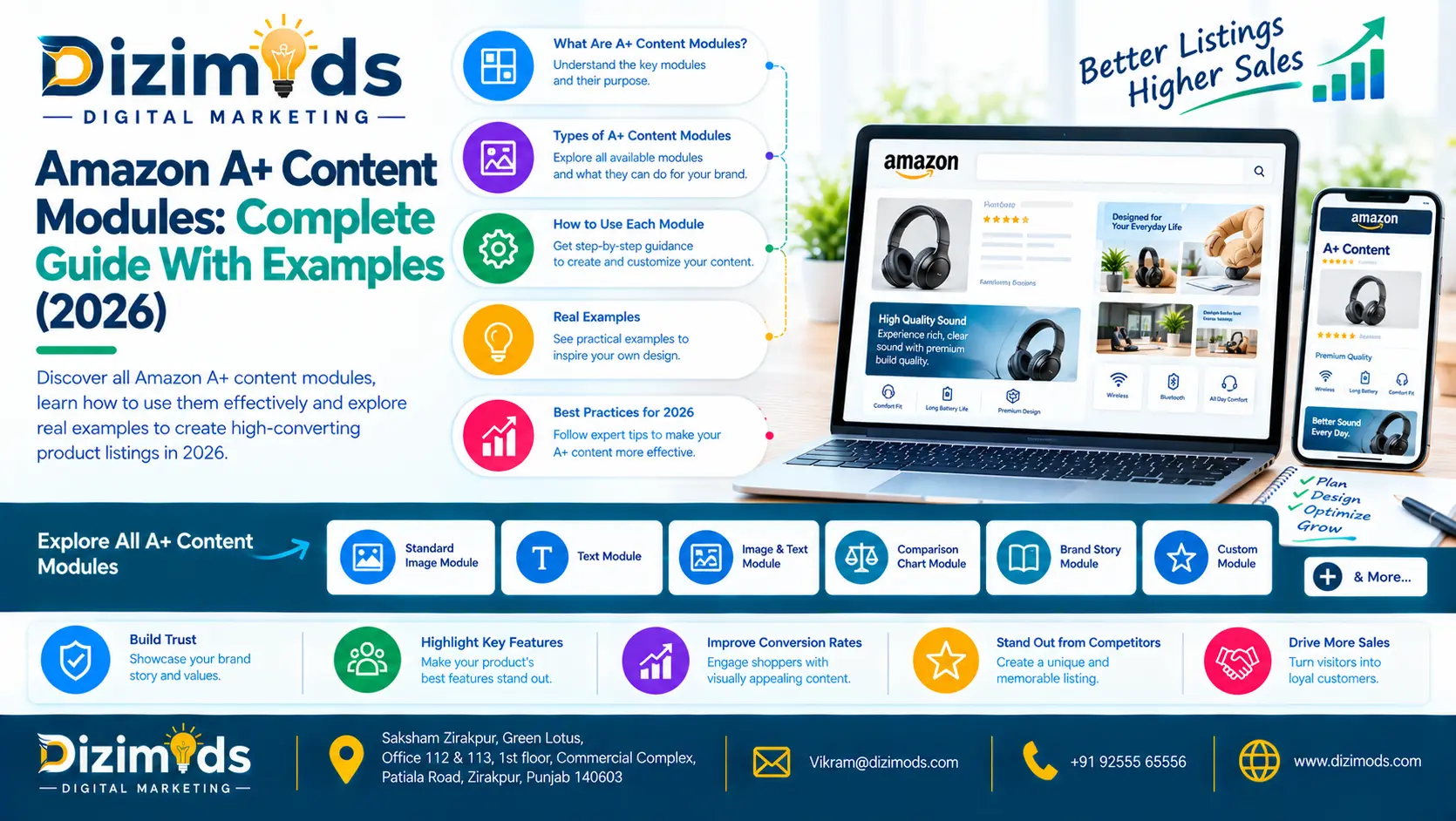
In this complete guide, Dizimods explains what A+ Content modules are, the different module types available, practical examples, optimization tips, and how professional Amazon services can help improve your product listings in 2026.
What Are Amazon A+ Content Modules?
Amazon A+ Content modules are predefined content layouts that eligible sellers and vendors can use to enhance their product detail pages. They allow brands to present product features, benefits, specifications, and brand stories through structured visual content.
Instead of relying only on plain text descriptions and bullet points, sellers can use images, headings, informative text, and comparison tables to explain what makes their products valuable.
The available layouts depend on the content type, marketplace, and account eligibility. Standard A+ Content and Premium A+ Content may offer different module options.
For example, a skincare brand can use lifestyle images, ingredient highlights, and usage instructions to explain its product. An electronics brand can use feature graphics and comparison charts to help shoppers understand the differences between product models.
Well-planned Amazon A+ content can improve the shopping experience, answer common questions, and support purchase decisions. However, results depend on factors such as pricing, product quality, reviews, competition, and traffic.
Types of Amazon A+ Modules You Should Know
Choosing the right modules is essential for creating an effective product page. Each layout serves a different purpose, so the best combination depends on your product and target audience.
1. Image and Text Modules
Image and text layouts combine product photography with supporting copy. They are useful for highlighting important features and explaining product benefits in a clear, visually appealing way.
Example: A kitchen appliance brand can display an image of its product in use alongside a short explanation of its energy efficiency, design, or ease of cleaning.
Best for: Home appliances, beauty products, kitchen accessories, and lifestyle products.
2. Standard Image Header and Banner Modules
Banner-style layouts introduce a product or brand using prominent imagery and a concise headline. They help establish the visual direction of the page and communicate the main selling proposition.
Example: A fitness accessories brand can use a lifestyle banner showing an athlete using its resistance bands, followed by a headline describing the product’s intended benefits.
Best for: Brands that want a consistent visual identity across their Amazon product pages.
3. Product Feature Modules
Feature-focused layouts explain individual product benefits through images, headings, and concise descriptions. They help customers understand how a product works and why its features matter.
Example: A wireless headphone listing might highlight battery life, comfort, connectivity, and portability in separate content sections.
Focus on customer benefits rather than simply repeating technical specifications.
4. Comparison Chart Modules
Comparison charts allow shoppers to compare related products from the same brand. Depending on the available module and eligibility, they can show differences in product features, specifications, and other supported attributes.
Example: A skincare brand with several moisturizers can help customers compare the intended skin types, textures, and key ingredients of its products.
Comparison charts are particularly useful when customers need help choosing between multiple models, sizes, or product variations.
5. Brand Story Modules
Brand story content helps communicate your company’s background, mission, values, and product range. It can help shoppers understand what distinguishes your brand from competitors.
Example: A sustainable home goods brand can explain its design philosophy, manufacturing approach, and product collection.
Keep the story authentic, relevant, and focused on information that matters to customers.
6. Premium A+ Content Modules
Premium A+ Content may provide additional immersive layouts and interactive experiences for eligible brands. Depending on availability, these can include video, interactive hotspots, enhanced image presentations, and other rich content formats.
Example: A furniture brand could use a video demonstrating product assembly or interactive hotspots identifying specific design features.
Premium features and eligibility requirements can change, so sellers should confirm the options available in their Amazon marketplace and Seller Central account.
Amazon A+ Content Modules: Examples by Product Category
The most effective module combination depends on the product, its price point, and the questions customers typically ask before purchasing.
Product category | Recommended content | Purpose |
Beauty and skincare | Ingredient highlights, usage steps, lifestyle images | Explain benefits and application |
Electronics | Feature graphics, specifications, comparison charts | Clarify technical differences. |
Home and kitchen | Product-in-use images, dimensions, feature highlights | Demonstrate functionality. |
Fashion accessories | Lifestyle photography, material details, styling ideas | Communicate design and use |
Fitness equipment | Demonstration images, feature benefits, comparison charts | Explain functionality and product selection. |
These examples are content strategies rather than fixed module requirements. Select layouts based on the options available in your account.
How to Choose the Right A+ Content Modules
Creating an effective page involves more than adding attractive graphics. Every module should answer a customer question or communicate a meaningful product benefit.
Understand Your Target Audience
Identify your ideal customers and understand what they want to know before buying. Consider common concerns about size, compatibility, ingredients, durability, maintenance, or ease of use.
Use these insights to plan your content structure.
Highlight Benefits, Not Just Features
Customers want to understand how a product fits into their lives. Instead of listing a technical feature without context, explain its practical value.
For example, rather than stating only that a storage container has an airtight lid, explain how the design helps keep stored food protected from outside air.
Use High-Quality Images
Images should be clear, relevant, and consistent with your brand identity. Lifestyle photography can demonstrate real-world usage, while infographics can simplify complex features.
Ensure that images comply with Amazon’s current content requirements and that text remains readable on mobile devices.
Keep Content Easy to Scan
Use short paragraphs, descriptive headings, and clear visual hierarchy. Avoid overcrowding images with text or repeating the same information across multiple modules.
A shopper should be able to understand your product’s main advantages quickly.
Maintain Brand Consistency
Use consistent typography, colors, image treatments, and messaging across your product range. A cohesive presentation helps customers recognize your brand and creates a more professional shopping experience.
Amazon A+ Content vs. Standard Product Listings
A standard Amazon product listing typically includes a title, images, bullet points, product description, pricing, and other relevant information. A+ Content adds enhanced visual and informational sections to eligible product detail pages.
For sellers investing in Amazon Product Listing optimization, these elements should work together rather than compete for attention.
The product title should clearly identify the item. Bullet points should communicate key features and benefits. Product images should demonstrate the product, while A+ Content can provide additional context, brand information, and comparisons.
Remember that A+ Content does not replace the need for accurate product information, competitive pricing, high-quality images, or effective advertising.
How Amazon A+ Content Supports SEO and Conversions
Amazon A+ Content can support conversion optimization by helping customers understand product benefits and make better-informed decisions. It may also contribute to a more consistent brand experience across product detail pages.
However, A+ content should not be treated as a guaranteed ranking factor or a replacement for listing optimization.
A comprehensive strategy should include:
- Relevant keywords in appropriate listing fields.
- Clear, accurate product titles and bullet points.
- High-quality product images and informative A+ content.
- Competitive pricing and accurate product information.
- Analysis of advertising performance and customer behavior.
- Regular reviews of listing performance and opportunities for improvement.
Brands seeking professional Amazon SEO services should prioritize a complete optimization strategy rather than focusing on a single content element.
The Role of Amazon Account Management and Advertising
Optimizing a product page is only one part of building a successful Amazon business. Sellers also need to manage inventory, monitor performance, analyze advertising campaigns, and maintain listing quality.
Professional Amazon account management services can help businesses coordinate these activities, depending on the scope of the service.
An experienced Amazon Ads manager can review campaign performance, identify inefficient spending, test relevant targeting strategies, and help align advertising with product-level goals.
A well-optimized listing can support advertising efforts by giving shoppers clearer information after they click an ad. Nevertheless, advertising results depend on several factors, including targeting, competition, pricing, and product demand.
At Dizimods, businesses can explore an integrated approach to listing content, marketplace optimization, and account growth based on their specific needs.
Amazon Reviews, Product Reviews, and the Amazon Vine Program
Customer feedback is another important part of the shopping experience. Before purchasing, shoppers often look at Amazon reviews, an Amazon product review, and overall Amazon product reviews to understand other customers’ experiences.
Reviews may offer insight into product quality, usability, packaging, and customer satisfaction. Brands should monitor feedback, respond appropriately where permitted, and use recurring themes to identify opportunities for product or listing improvements.
What Is Amazon Vine?
The Amazon Vine program is an Amazon initiative that invites eligible reviewers, known as Vine Voices, to receive eligible products and provide honest reviews. Participation and product eligibility are subject to Amazon’s current rules and marketplace requirements.
Sellers researching the Amazon Vine Voice program should understand that reviews are intended to reflect reviewers’ genuine opinions. Enrollment does not guarantee a positive review, a specific number of reviews, or increased sales.
For sellers in India, searches such as “Amazon Vine Program India” and “Amazon Vine India” reflect interest in marketplace-specific availability. Check the current Amazon Seller Central documentation for India to confirm whether the program is available to your account and which eligibility requirements apply.
Brands should never purchase fake reviews, offer prohibited incentives for positive feedback, or attempt to manipulate ratings. Sustainable growth comes from product quality, accurate descriptions, compliant review practices, and a positive customer experience.
Common Mistakes to Avoid When Creating A+ Content
Even attractive designs can underperform when the content does not address customer needs.
1. Using too much text: Long paragraphs and excessive information can make the page difficult to scan.
2. Repeating existing content: Repeating the same bullet points in every module wastes space that could explain additional benefits.
3. Using low-quality visuals: Blurry images, inconsistent colors, and crowded graphics can weaken the presentation.
4. Making unsupported claims: Every product claim should be accurate, substantiated where necessary, and compliant with Amazon’s policies.
5. Ignoring mobile shoppers: Check how your content appears on smaller screens and ensure that important information remains readable.
6. Forgetting performance analysis: Review relevant business metrics and customer feedback to identify what may need improvement. Do not assume that a particular module will automatically increase conversions.
How Dizimods Can Help Optimize Your Amazon Business
Creating effective A+ content requires a combination of design, copywriting, marketplace knowledge, and ongoing optimization. For brands with multiple products, maintaining consistent content across a catalog can also require considerable time and resources.
Dizimods can be positioned as a partner for businesses looking to improve their Amazon presence through listing content and marketplace-focused services.
Depending on your business requirements, explore support for:
- Amazon A+ Content planning and design.
- Amazon product listing optimization.
- Keyword research and listing content development.
- Amazon SEO and product detail page improvements.
- Advertising campaign management.
- Ongoing Amazon account management.
A coordinated approach helps align your product messaging, visual presentation, and advertising strategy. The right service scope depends on your catalog size, category, goals, and existing marketplace performance.
If you want to improve your product detail pages, start by identifying your customers’ most important questions and selecting A+ Content modules that answer them clearly. Dizimods can be considered for support with building a structured Amazon optimization strategy tailored to your brand.
Frequently Asked Questions (FAQs)
Conclusion
Amazon A+ Content modules give eligible brands a practical way to present product benefits, explain features, share brand stories, and compare products through enhanced content layouts. From image-and-text sections to comparison charts and Premium A+ experiences, each module can serve a specific purpose in the customer journey.
The key is to choose layouts strategically, use accurate and engaging content, maintain visual consistency, and connect listing improvements with broader SEO and advertising efforts.
For brands aiming to strengthen their Amazon presence in 2026, A+ Content should be part of a complete marketplace strategy that includes product listing quality, customer feedback, advertising, and ongoing performance analysis.
With a thoughtful content plan and the right support from Dizimods, businesses can build clearer, more informative product pages that help customers make confident purchasing decisions.
Result-Driven SEO Agency Backed by Experience
Built for brands that want long-term growth – not shortcuts.