

Table of Contents
Selling on Amazon requires more than uploading product images and writing a basic description. Customers want to understand what a product does, how it benefits them, and why they should choose it over competing options. A well-optimized product detail page can help answer these questions and create a better shopping experience.
This is where Amazon A+ Content becomes valuable. Eligible brands can use enhanced content layouts to present product features, lifestyle images, comparison charts, and brand information in a more engaging format.
Choosing the right Amazon A+ modules can help sellers communicate product benefits clearly, address common customer concerns, and create a consistent brand experience. However, the most effective module combination depends on the product category, target audience, available features, and marketplace requirements.
In this guide, Dizimods explores the 10 best Amazon A+ Content modules, practical examples, optimization tips, and ways to integrate enhanced content into your broader Amazon growth strategy.
What Are Amazon A+ Content Modules?
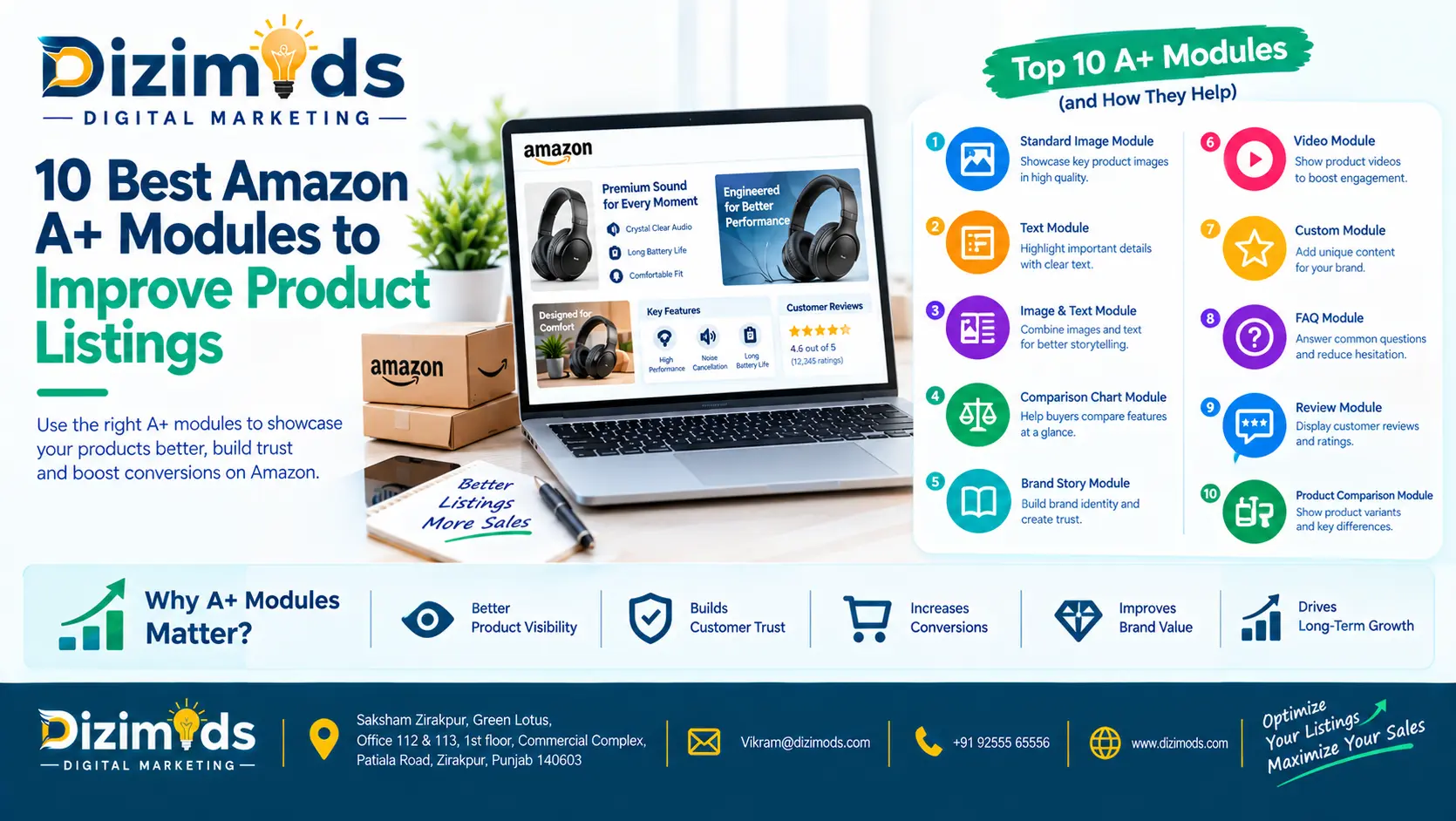
Amazon A+ content modules are predefined layouts that eligible sellers and vendors can use to enhance their product detail pages. They combine visual elements and text to communicate product information more effectively than a basic description alone.
Depending on eligibility and marketplace availability, these layouts may include image-and-text sections, feature highlights, comparison charts, brand storytelling, and additional interactive experiences through Premium A+ Content.
For example, an electronics brand can use feature graphics to explain battery life and connectivity, while a skincare brand can highlight ingredients, usage instructions, and product benefits.
The goal is not simply to make a listing look attractive. Effective A+ content modules should help shoppers understand the product, find relevant information, and make informed purchasing decisions.
10 Best Amazon A+ Modules to Improve Product Listings
1. Standard Image Header With Text
An image header with supporting text is a useful way to introduce a product’s primary benefit. It combines a prominent visual with a concise headline or description.
This module can establish the main message before customers explore the remaining content.
Example: A home appliance brand could show its coffee maker in a modern kitchen, followed by a headline highlighting convenience and everyday usability.
Best for: Home appliances, kitchen products, lifestyle accessories, and consumer electronics.
Optimization tip: Use a relevant image and a benefit-focused headline. Avoid generic statements that could apply to almost any product.
2. Standard Three-Image and Text Module
A three-image layout can communicate several product features in a structured format. Each image can focus on one benefit, making the information easier to scan.
For example, a travel backpack listing could highlight storage compartments, adjustable straps, and organizational features.
This format works well when customers need to understand multiple aspects of a product without reading long paragraphs.
Best for: Backpacks, home accessories, fitness equipment, beauty products, and small appliances.
Optimization tip: Give each section a distinct purpose. Use concise copy and consistent image styling to maintain visual clarity.
3. Product Feature Highlight Module
Feature-focused modules explain the important characteristics of a product through supporting images and text.
Rather than simply listing technical specifications, sellers should explain how each feature benefits the customer.
Example: A wireless speaker listing could explain its connectivity options, portability, and control features, provided those claims accurately describe the product.
Feature highlights can be especially useful for products with several technical specifications or functional advantages.
Best for: Electronics, tools, kitchen appliances, and fitness equipment.
Optimization tip: Prioritize the features that influence purchase decisions. Keep technical details accurate and avoid unsupported performance claims.
4. Comparison Chart Module
Comparison charts help customers evaluate related products from the same brand. Depending on the available layout, sellers can present differences between models, product features, and supported specifications.
Example: A skincare brand selling moisturizers for different skin types could use a comparison chart to explain the intended use and key differences between its products.
This module can reduce confusion when shoppers are choosing between similar products.
Best for: Electronics, skincare collections, kitchen appliances, and products available in multiple models.
Optimization tip: Make differences easy to understand. Use accurate information and avoid misleading comparisons with competing brands.
5. Standard Image and Text Overlay Module
Image-and-text overlay layouts can communicate a short message directly within a visual presentation. When used effectively, they help connect product imagery with a specific benefit or use case.
Example: A yoga accessories brand could use a lifestyle image showing a yoga mat in use alongside concise messaging about its intended design and portability.
This approach helps create an emotional connection while keeping the content relevant to the product.
Best for: Lifestyle products, home décor, fitness accessories, and fashion accessories.
Optimization tip: Ensure that text remains readable on mobile devices and that the image supports the message rather than distracting from it.
6. Product Benefits and Lifestyle Image Module
Lifestyle-focused content shows customers how a product may fit into everyday situations. It can help shoppers understand the intended use, context, and practical benefits of an item.
Example: A storage organizer brand could show its product in a well-organized wardrobe, followed by text explaining the storage features and intended applications.
Lifestyle imagery should demonstrate realistic usage rather than make exaggerated claims.
Best for: Furniture, home organization, kitchen accessories, personal care, and outdoor products.
Optimization tip: Choose images that reflect your target audience and show the product clearly. Keep the accompanying copy specific and useful.
7. Technical Specifications Module
For products with important measurements or compatibility requirements, a specifications-focused layout can make decision-making easier.
Customers may want to know dimensions, materials, capacity, included components, or supported connections before placing an order.
Example: An electronics brand could clearly explain device dimensions, compatible connections, and included accessories.
This information can help shoppers assess whether a product meets their requirements.
Best for: Electronics, tools, appliances, furniture, and specialized equipment.
Optimization tip: Verify every specification against the actual product documentation. Do not omit limitations that customers need to understand.
8. Brand Story Module
Brand story content helps businesses communicate their background, values, mission, and wider product range. It can give customers more context about the company behind the product.
Example: A sustainable home goods brand could explain its design philosophy, product collection, and commitment to responsible sourcing, provided those claims are accurate.
A compelling brand story should focus on relevant information instead of becoming a long promotional message.
Best for: Private-label brands, established manufacturers, lifestyle businesses, and brands with multiple related products.
Optimization tip: Use authentic messaging and consistent visual branding. Explain what distinguishes your brand without making unsupported claims.
9. Video and Interactive Premium A+ Content
Eligible brands may have access to Premium A+ Content features that provide richer product experiences. Depending on current marketplace availability, these may include video, interactive hotspots, and additional immersive layouts.
Video can demonstrate a product in action, while interactive features can help explain specific components or functions.
Example: A kitchen appliance brand could demonstrate how to assemble, operate, or clean a product.
Best for: Electronics, appliances, furniture, tools, and products that benefit from demonstrations.
Optimization tip: Keep demonstrations focused and informative. Confirm Premium A+ eligibility and available features in Seller Central before planning your content.
10. Cross-Selling and Product Collection Module
When a brand offers complementary products, related-product content can help customers discover more of its catalog. Available layouts and linking options depend on Amazon’s current tools and eligibility rules.
Example: A fitness brand could help shoppers discover complementary resistance bands, exercise mats, or training accessories.
Cross-selling should improve product discovery rather than overwhelm customers with unrelated recommendations.
Best for: Brands with coordinated product collections, accessories, and complementary items.
Optimization tip: Select genuinely relevant products and ensure that all referenced products have accurate, complete listings.
Note: These descriptions represent common content strategies and layout purposes, not guaranteed names of individual modules in every Seller Central interface. Exact module names, availability, and limits can change by marketplace and content type.
How to Choose the Right Amazon A+ Content Modules
The best module combination depends on the information customers need before buying. Before designing your page, consider the following factors.
Understand Customer Questions
Review product feedback, customer questions, and common objections. Determine whether shoppers need more information about product dimensions, compatibility, ingredients, materials, or everyday use.
Use your findings to decide which content deserves the most attention.
Prioritize the Most Important Benefits
Your content should answer the question, “Why is this product suitable for me?”
Organize features around customer needs and explain benefits clearly. Avoid repeating the same information across multiple modules.
Design for Mobile Shopping
Many shoppers browse Amazon on mobile devices. Use readable text, clear visual hierarchy, and uncluttered images. Review how the content appears across available device previews before publishing.
Maintain Accurate and Consistent Information
Check that your A+ content matches the product title, bullet points, images, specifications, and actual product. Inconsistent information can confuse shoppers and undermine trust.
Measure Performance Over Time
Monitor relevant business metrics and compare performance before and after significant listing changes where suitable data is available. Remember that traffic, pricing, seasonality, advertising, and competition can also affect results.
How Amazon A+ Content Supports Amazon SEO
Amazon A+ Content should be part of a broader listing optimization strategy. It helps present product information and brand messaging, but it should not be treated as a guaranteed ranking factor.
Effective Amazon Product Listing optimization includes accurate product titles, relevant keywords in appropriate fields, informative bullet points, strong product images, and useful enhanced content.
Professional Amazon SEO services may help sellers research search terms, improve listing copy, identify content gaps, and maintain consistency across their catalogs.
A well-structured listing can also support advertising efforts by providing a more informative destination for potential customers. However, improved content alone cannot guarantee higher rankings or increased sales.
The Role of Amazon Account Management and Advertising
Amazon growth involves more than listing design. Inventory planning, campaign management, performance monitoring, and listing maintenance can all influence business results.
Professional Amazon account management services may help businesses coordinate these activities according to their needs.
An experienced Amazon Ads manager can help review campaign targeting, advertising spend, search-term performance, and opportunities for optimization. Advertising strategy should align with product profitability, customer demand, and listing quality.
Dizimods can be considered for a coordinated approach to Amazon listing content, SEO, advertising, and account management, depending on the services available and the requirements of your business.
Amazon Reviews and the Amazon Vine Program
Customer feedback can influence how shoppers evaluate a product. Many buyers read Amazon reviews, an individual Amazon product review, and overall Amazon product reviews before making a decision.
Brands should monitor feedback, identify recurring product concerns, and ensure that listing content accurately describes the product. Genuine customer experiences can also reveal opportunities to improve product quality and customer support.
What Is Amazon Vine?
The Amazon Vine program is an Amazon initiative through which invited reviewers, known as Vine Voices, can receive eligible products and submit honest reviews.
Sellers researching the Amazon Vine Voice program should understand that reviews reflect reviewers’ genuine opinions. Participation does not guarantee positive feedback, a particular number of reviews, or improved sales.
For sellers in India, search terms such as “Amazon Vine Program India” and “Amazon Vine India” reflect interest in local program availability. Check current Amazon Seller Central documentation to confirm eligibility, enrollment requirements, and availability for your marketplace.
Avoid fake reviews, prohibited incentives, or attempts to manipulate customer ratings. Review-related activities must comply with Amazon’s current policies.
How Dizimods Can Help Improve Your Amazon Product Listings
Creating effective A+ content requires strategic planning, accurate copy, quality visuals, and knowledge of marketplace requirements. Managing these activities across many products can become challenging as a business grows.
Dizimods can help businesses explore an integrated Amazon optimization strategy based on their goals and service requirements.
Potential areas of support include:
- Amazon A+ Content planning and design.
- Amazon product listing optimization.
- Keyword research and listing content improvements.
- Amazon SEO strategy.
- Advertising campaign optimization.
- Amazon account management.
A coordinated strategy can help align listing content, product messaging, and advertising activities. Before selecting a service, define your objectives, identify your catalog’s biggest challenges, and confirm the provider’s exact deliverables.
Frequently Asked Questions (FAQs)
Conclusion
The right Amazon A+ modules can make product detail pages more informative, visually engaging, and easier to navigate. From feature highlights and comparison charts to brand story content and premium A+ experiences, each layout should serve a clear customer need.
Focus on accurate information, useful imagery, readable copy, and a consistent brand identity. Combine enhanced content with broader listing optimization, advertising analysis, and compliant review practices for a more complete Amazon strategy.
For businesses looking to improve their marketplace presence in 2026, Dizimods can be a starting point for exploring relevant listing optimization and Amazon growth services.
Result-Driven SEO Agency Backed by Experience
Built for brands that want long-term growth – not shortcuts.