

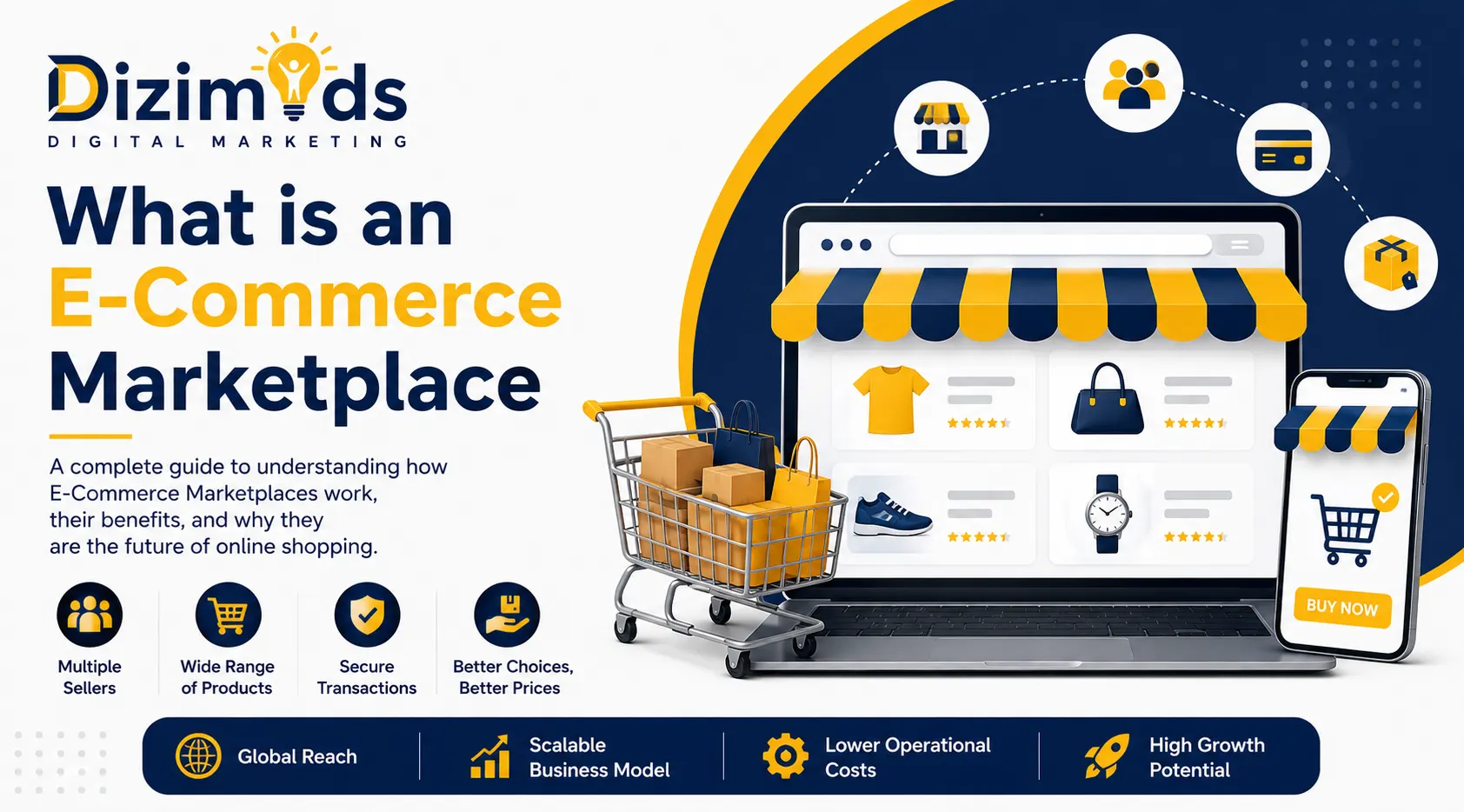
An e-commerce marketplace is an online platform where multiple sellers, brands and vendors showcase and sell their products through a single website. An e-commerce marketplace platform allows customers to browse, compare and purchase products from different suppliers in one place.
The marketplace owner is responsible for attracting customers, managing transactions and maintaining the platform, while third-party vendors handle manufacturing, inventory and shipping. This model simplifies online selling and often supports dropshipping, where products are shipped directly from suppliers to customers.
Popular e commerce marketplaces such as Amazon, eBay, Alibaba and Flipkart have achieved tremendous success using this business model. These e-commerce marketplaces operate on a centralized infrastructure that enables multiple vendors to sell products under one platform. In return, the marketplace owner earns revenue through commissions, subscription fees or advertising charges.
Types of Online Marketplace

1. Buyer-Oriented E-Commerce Marketplace
A buyer-oriented e-commerce marketplace service is designed to help buyers find the best suppliers at competitive prices. These platforms reduce procurement costs and create a more efficient purchasing environment. Exostar is a well-known example of this type of marketplace e-commerce platform.
2. Supplier-Oriented Marketplace E-Commerce
A supplier-oriented e-commerce marketplace ecommerce platform is operated by suppliers who want to increase visibility, generate leads and establish a stronger sales channel. Cisco Connection Online (CCO) is a successful example of a supplier-focused ecommerce marketplace.
3. Vertical and Horizontal E-Commerce Marketplaces
4. Independent E-Commerce Marketplace
Benefits of Marketplace Ecommerce
Business Benefits
- An e-commerce SEO platform generates revenue through commissions on vendor sales.
- Transparent pricing and stock visibility improve trust and efficiency.
- Businesses can establish new trading relationships within their supply chain.
- Online operations eliminate geographical barriers and allow 24/7 transactions.
- Multiple vendors create more product variety and attract a larger audience.
Benefits for Buyers
- Access to a wide range of products from different sellers.
- Easy comparison of prices and product features.
- Real-time information about product availability and pricing.
- Ability to identify trusted sellers through reviews and ratings.
- Better opportunities to find quality products at competitive prices.
Benefits for Sellers
Smaller businesses can leverage established ecommerce growth reviews without investing in their own website.
Reduced marketing and customer acquisition costs.
Additional sales channels for business growth.
Increased brand visibility and customer reach.
Opportunities to expand into international markets through global e-commerce marketplaces.
E-Commerce Marketplace Challenges and Solutions
Seller and Buyer Retention
One of the biggest challenges for any e-commerce marketplace is retaining active buyers and sellers. Businesses must continuously improve user experience, offer incentives and provide value-added services to maintain engagement.
Connecting Buyers with Relevant Sellers
Building Trust Between Buyers and Sellers
Trust is essential for any e-commerce marketplace agency. Features such as ratings, reviews, testimonials, verified seller badges and social proof help establish credibility and encourage conversions.
User Experience
Price Competition
In large ecommerce marketplaces, vendors often compete aggressively on pricing. While this benefits customers, it can reduce profitability for sellers. Marketplace owners should help sellers differentiate through branding, quality and customer service.
Quality Assurance
Conclusion
The e-commerce marketplace model has transformed the way businesses and consumers interact online. Whether you’re a startup, retailer or established brand, leveraging marketplace ecommerce platforms can help you increase visibility, reach new customers and drive long-term growth.
At Dizimods, we help businesses optimize their presence on Amazon, Flipkart, Meesho, Myntra, Nykaa and other leading ecommerce marketplaces through expert marketplace management, SEO and digital marketing services.
Frequently Asked Questions (FAQs)
An e-commerce marketplace is an online platform where multiple sellers offer products or services to customers through a single website, such as Amazon, Flipkart or eBay.
Result-Driven SEO Agency Backed by Experience
Built for brands that want long-term growth – not shortcuts.