

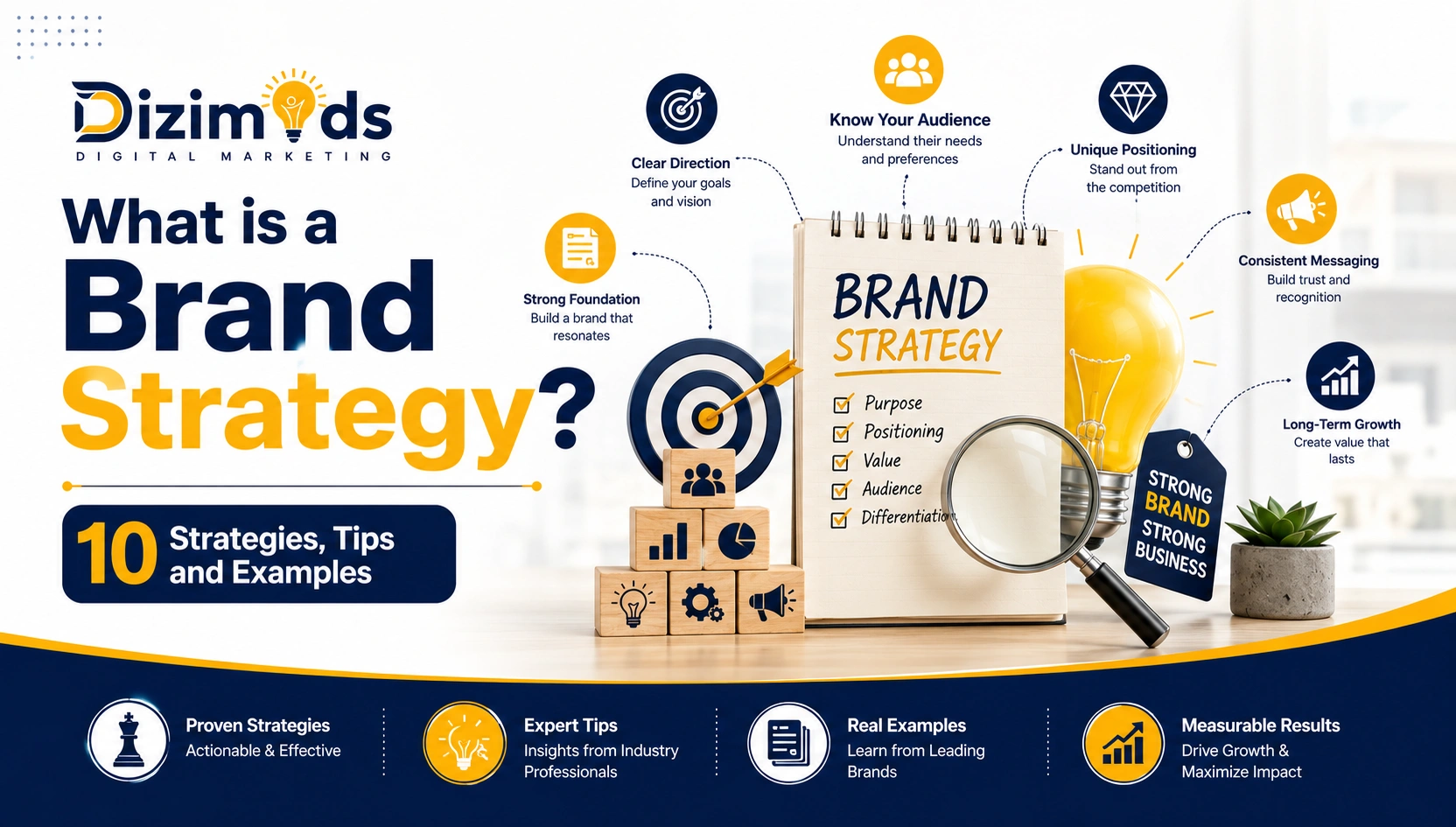
Your brand strategy is an integral part of the success of your business’ marketing. It helps shape your brand’s purpose in relation to how you will market and communicate to customers. The best brand strategies speak your target customers and provide your value proposition and what customers will gain.
What is brand strategy?
A brand strategy definition describes a brand strategy plan. It contains details about the presentation of the brand, as well as unique values, mission, and vision. Additionally, a brand strategy assists in recognizing the brand and shaping customer perception.
There exists a clear distinction between a brand identity and a brand development strategy. Brand identity is a reflection of the visual components of a company. It contains the tone of the company, their graphics, color palettes, and typography. All of these components and how they are utilized to express the perception of consumers are contained within the brand strategy.
Read More Blog: Meesho Rating Increase Guide 2026 – Boost Sales Fast
Brand Marketing Guidelines

Creating a brand guide isn’t just for sharing your core values and purposes. It’s also necessary for successful brand positioning and a great customer experience. Here are six aspects to consider:
Improving Loyalty
Strong brand guidelines help customers know what to expect from you, which builds trust and encourages the development of long-term customer relationships.
Building Brand Recognition
Brand guidelines increase awareness and recognition of your brand on different platforms. Using the same imaging, tone, and language across your marketing materials makes it easy for customers to notice and recognize your brand online.
Attracting Target Customers
If you want to attract the right customers, you first need to develop a distinctive brand identity and voice and know where to market your brand. Guidelines covering your brand’s tone, messaging, and imagery are must-haves for attracting your target audience.
Ensuring Brand Consistency
Brand guidelines create a repeatable experience for customers across platforms and over time. Consistency is key for meeting customer expectations throughout all touchpoints in the buyer’s journey.
Providing Hiring Guidelines
Consider your brand values and purpose when making hiring decisions, and make sure new employees are a good reflection of your brand.
Building Brand Equity
Your brand’s equity, or the value you bring to customers, is determined by how they perceive your brand and what they associate with your brand. Brand guidelines that showcase your quality and promote positive customer experiences increase brand equity.
Read More Blog: Myntra Seller Review: How to Identify Trusted Sellers on Myntra
10 Types of Branding Strategies and Case Studies

Here are nine examples of branding strategies to help you identify the right option for your local business.
1. Corporate Branding
To your customer base, or target market, corporate branding helps construct an image of your business. Corporate branding uses multiple facets of a business’ operations, e.g. partnerships, public stances, and parts of the brand identity(s) like tone and voice, among many others.
Example: Apple
Apple connects to customers at an emotional level through Apple’s corporate branding of innovation, imagination, and creativity.
2. Product Branding
Product branding is the effort of constructing a business or agency’ brand such that the product or service sold is recognizable to the general public.
Example: Coca-Cola
The entire world recognizes Coca-Cola’s branding of a red colored can. The color red has been a staple of their advertising.
3. Service Branding
Service branding is the effort of constructing a brand for a service as opposed to product. To a consumer, service branding articulates the value that service would offer. Service branding is important for businesses such as an airline, a bank, consultancy, law firms, insurance companies, among others.
Example: Geico
Geico is service branding’s typical example. The gecko mascot and the slogan “15 minutes or less can save you 15% or more on car insurance,” is synonymous with the insurance brand. Humor is incorporated into the gecko, while the branding is a distinguished effort.
Read More Blog: Flipkart Review Service Provider: How to Boost Seller Ratings Fast
4. Retail Branding
Retailers are known for particular attributes in their branding. For example, in a physical store you would use displays, store fixtures, signage, and even store layout generally to highlight products and build your brand. Most retailers who have a physical store, have an online store as well. If that is the case, ensure that your store branding is consistent both on and offline.
Example: Walmart
One of the best examples of retail branding is Walmart. As you know, all of Walmart’s physical stores brand in the same way and you would find that same branding on the company’s ecommerce and any online marketing as well.
5. Personal Branding
This is an individual form of branding as compared to the other forms of branding. This kind of branding focuses on the marketing of yourself as a person and putting focus on particular thoughts, talents or skills that other people may not have. It is a common form of branding for celebrities, influencers, and even politicians or leading thinkers.
In addition to them, people who are in other professions, for example, medicine, law, or even those who are working on freelance jobs, need to pay attention to their personal branding.
Example: Elon Musk
If there’s one person who demonstrates personal branding the best, it has to be Elon Musk. How many people can you name who can start a company and build a brand and sell it all in a lifetime and still be known for something else?When you think of Musk, you think of Tesla. Starting with the company founded by him, we can think about the Voltswagen controversy and some of the crazy things that came out when he took control of Twitter.
An even better demonstration of this is to think of almost all of the best influencers in the spotlight. The concept of personal branding has to basically be the most crucial aspect of it all.
Read More Blog: Meesho Online Shopping Review: Complete Guide for New Buyers
6. Geographical Branding
Geographical branding refers to the exclusive identification of a certain area or location of a product or service. Because of this exclusivity, it puts emphasis on the entire area or location of the product or service. This type of branding is the best strategy for local businesses. It is also used in branding hotels, tourist attractions, and other geographical areas such as cities and countries.
Example: McDonalds
Geographical branding is also used in the various business strategies of international companies. In this case, McDonald’s is also a good example of geographical branding. McDonald’s modifies its advertisements to suit food culture and preferences of the different regions and countries. The business branding strategy McDonald’s employs in the U.S, is different to that of McDonald’s in Japan, and in other countries.
As geographical branding incorporates the elements of culture, this type of branding goes a little further. Business strategists design cultural brands to fulfill emotional needs. This type of branding is often used by tourism and business to business companies.
7. Co-Branding
In co-branding, a product or service is offered through the collaboration of multiple companies. In co-branding, there may be the establishment of a new brand identity or the use of a combination of the individual brand identities.
Example: Uber and Spotify
Most co-branding is intended to create a larger market segment by introducing the product to a different segment. Similar to any other collaboration, co-branding allows each company to market the product to the other companies customers.
Look at 2015’s “A soundtrack for your ride,” a collaboration of Uber and Spotify. Through co-branding, Uber riders could control the music in the car and choose from their Spotify playlists. The collaboration was a success, bringing more users to Spotify and increasing the media buzz.
8. Online Branding
Online branding, or internet branding, consists of the different online contents of a business, collected to form a complete picture of the business. Online branding aims to strengthen the positioning of a business’ digital brand. Online branding can be done in different mediums, such as social media, blogs, or websites.
Example: Starbucks
Starbucks is a business with a strong digital brand, and is therefore a good example of effective online branding. Starbucks has created strong presences on all social media and has a strong corporate website. User-generated content is a great form of online branding. Starbucks uses it on all platforms and it helps strengthen their brand and community.
9. Offline Branding
As the name implies, branding offline is done outside of the digital world. Branding offline consists of business interactions done outside of work, such as business lunches. Branding offline can not be the only form of branding done. Most of your audience is a digital audience. Some businesses will find that branding offline is helpful.
10. Minimalist Branding
This strategy takes a minimalist approach, using sleek, modern, clean lines and a simple color palette to evoke a sophisticated aesthetic. Minimalist branding offers clear messaging and easily adapts to different marketing channels.
Example: Nike and Apple
Read More Blog: Top 15 SEO Services Companies in Delhi NCR, India
How to choose a brand strategy?

What determines the best branding strategy for your company? Different companies need different approaches. The size, type, and location of your company as well as your target market and industry competition factor into your unique branding strategy. Top tier companies know they need to evaluate the correct factors in order to develop their own brand strategy.
When determining which brand strategy to adopt, evaluate the following:
Business Goals
What goals does your business aspire to reach? Is the intent to inform the consumer of your brands social and corporate responsibility? Is the intent to create a connection with the consumer by leveraging common cultural values? Or is the intent to establish consumer association of the brand with a specific item or brand as well as service with a high level of customer satisfaction? These all entail different techniques.
Target Audience
Similar to all the other elements of marketing and promotion, the audience you intend to reach when branding is a central component to which branding strategy you choose. User personas incorporating demographic information, key interests and pain points, and purchasing intent, are useful to determine your target audience. Any user personas you have created for previous marketing strategy components in your company can be used here as well.
Using your personas, determine the type of branding for each market segment that would be the most effective. When determining the branding, incorporate the concerns of each persona. Knowing the when and where to reach your personas is important to the overall effectiveness of your marketing. Developing a brand voice is important, as is recognizing the need for different languages when marketing to different audiences.
Industry and Competitors
Competitor analyses are important for good reason. You need to know the strategies of your competitors and how successful those strategies are, and you need to learn from your competitors’ mistakes or you will be destined to repeat those mistakes.
At the same time, you need to examine your competitors to determine how to set yourself apart. Once you know how you are different, what branding strategy would be best to present that difference? A difference in values, products, culture, or other factors may come into play.
Brand Identity
When formulating your brand strategy, remember to keep your brand identity in mind. Which strategies and which elements of your brand identity would be most important to consumers? As with Chick-fil-A’s example for service branding, customer service is a key element of brand identity for Chick-fil-A, and thus is a good example of service branding.
Read More Blog: Top SEO Companies In India That Actually Deliver Results
Choose Your Brand Strategy
Branding strategies depend on various aspects of your business such as your product, your customer, your audience, etc.
Regardless of the strategy, you want to make the most of every opportunity and customer interaction to continue growing your business. With Ditmods, your customers can reach you in several different ways through all the different communication features Dizimods offers such as Website chat and text. Use these business expanding tools to effectively implement your business strategy.
Result-Driven SEO Agency Backed by Experience
Built for brands that want long-term growth – not shortcuts.