

1. What Is a Content Strategy?
2. Key Questions to Inform Your Content Strategy
3. 7 Steps to Create a Content Strategy
4. A Critical Piece of Digital Marketing
5. Why a Content Strategy Matters
6. How Dizimods Helps Businesses Succeed
7. Essential Elements of a Successful Content Strategy
The average internet user spends nearly 6 hours and 40 minutes online every day, making digital platforms the most effective place for businesses to connect with their target audience. Whether customers are browsing websites, engaging on social media or searching for products on search engines, brands need a strong online presence to capture their attention. At Dizimods, we help businesses create powerful digital content strategies that increase brand visibility, attract qualified traffic and turn online visitors into loyal customers.
A well-planned content strategy goes beyond simply publishing blog posts or social media updates. It involves creating valuable, engaging and SEO-optimized content that resonates with your audience across multiple digital channels, including your website, social media platforms, email campaigns and affiliate networks. Dizimods combines content marketing, search engine optimization (SEO), social media management and performance-driven digital marketing to ensure every piece of content supports your business goals and delivers measurable results.
Whether you’re looking to build brand awareness, generate high-quality leads or increase conversions, having a strategic content marketing plan is essential in today’s competitive digital landscape. Dizimods works closely with businesses to develop customized content strategies that align with customer intent, improve search engine rankings, strengthen brand authority and drive sustainable business growth. By leveraging data-driven insights and the latest digital marketing trends, we help brands maximize their online impact and achieve long-term success.
What Is a Content Strategy?

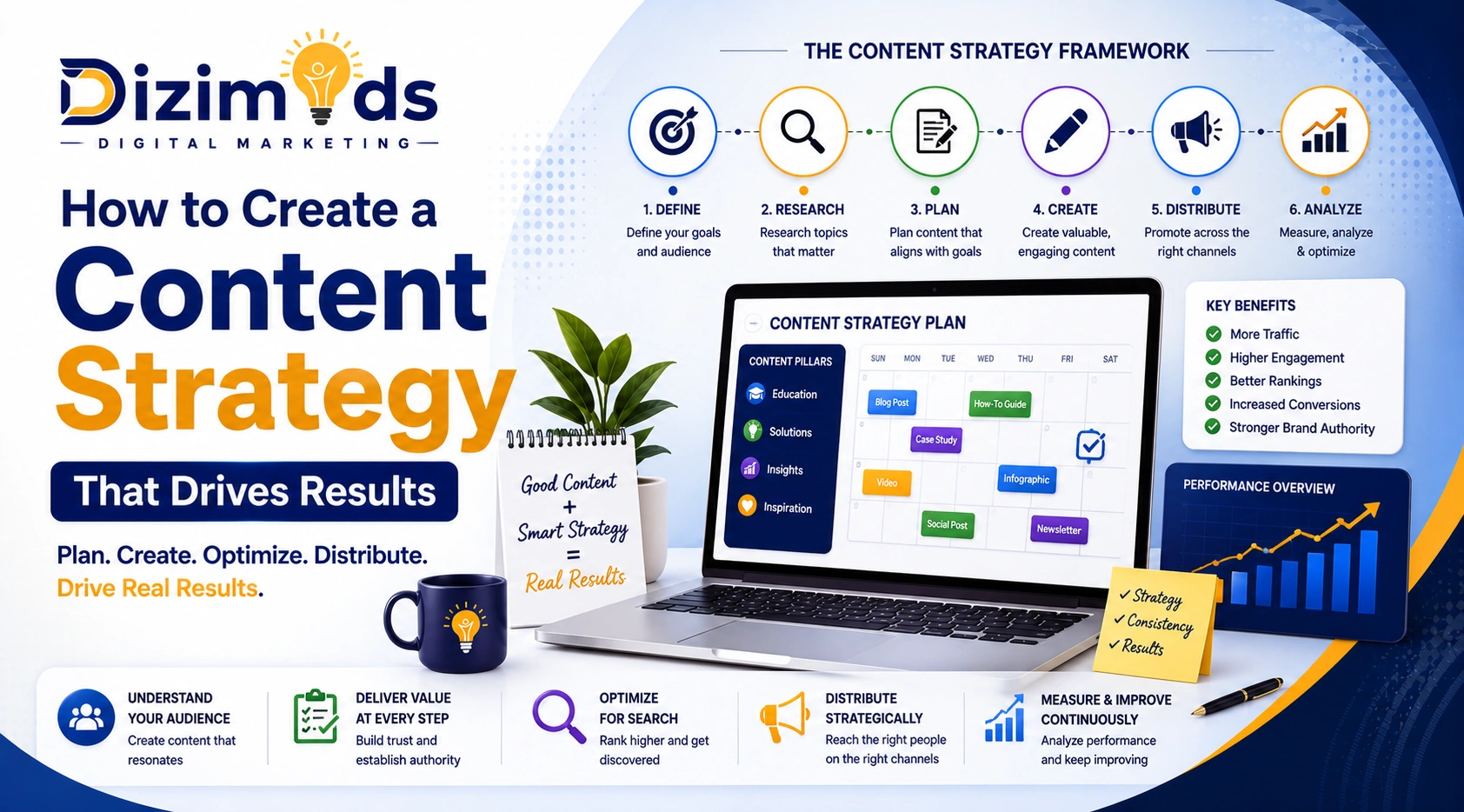
A content strategy is a well-defined plan that outlines how a business creates, manages, publishes and distributes content across digital channels. It includes various content formats such as blog articles, website pages, social media posts, videos, infographics, email campaigns, podcasts and other multimedia assets. The primary goal of a content strategy is to deliver valuable information to the target audience while supporting business objectives such as increasing brand awareness, improving search engine rankings, generating qualified leads and driving conversions.
At Dizimods, we believe that content is the foundation of every successful digital marketing campaign. High-quality, relevant and SEO-optimized content not only helps businesses rank higher on search engines but also builds trust, authority and long-term relationships with potential customers. A strategic content plan ensures that every piece of content serves a purpose, aligns with user intent and contributes to measurable business growth.
As the digital landscape continues to evolve, simply creating content is no longer enough. Businesses need a data-driven content strategy that integrates search engine optimization (SEO), content marketing, social media marketing and audience engagement. At Dizimods, we develop customized content strategies that help brands create meaningful customer experiences, improve online visibility and maximize the return on their digital marketing investments. By combining creativity with analytics, we ensure your content reaches the right audience at the right time and delivers lasting business results.
Read More Blog: Top 15 SEO Services Companies in Delhi NCR, India
Key Questions to Inform Your Content Strategy

Before you begin, gather the information you need to shape your approach. In Digital Marketing Strategy, Dizimods recommends asking yourself the following:
- Who’s your target audience?
- What problems are you solving for consumers?
- What makes you or your product unique?
- What format and tone should your content take?
- Where will you publish and distribute your content?
- How will you refresh, measure and optimize it?
Answering these questions won’t guarantee success, but it will provide direction. Existing documents, such as a brand audit or value proposition, can also guide your content strategy.
Read More Blog: Top SEO Companies In India
7 Steps to Create a Content Strategy
While many frameworks exist for developing a content strategy, the following steps cover the essentials you need to get started.
1. Define Goals and Objectives
Before pursuing any business initiative, you must clearly define your goals and objectives. These should align with your company’s mission and values.
Possible goals include:
- Building brand awareness
- Repositioning your brand to better connect with consumers
- Increasing trust and authority
- Educating customers to improve their experience
- Embracing digital innovation in marketing
- Generating leads, sales and revenue
- Improving customer retention
Identify key performance indicators (KPIs) that align with your goals, benchmark your current performance and track these metrics as you implement your strategy. This data will help you make informed, results-driven adjustments.
Check out the video below to learn more about how to measure marketing effectiveness and subscribe to our YouTube channel for more explainer content!
2. Identify Your Target Audience
A business’s target audience is the group of consumers most likely to be interested in its products or services—and who the content should reach.
By understanding who they are, the challenges they face and what motivates them, you can create content that truly resonates.
Consider key factors like:
- Demographic: Age, gender, occupation, income, lifestyle
- Behavior: Website habits, email open rates, purchase history
- Motivations: Primary reasons behind buying decisions
If you serve multiple audiences, tailor your content strategy for each group by addressing their unique needs and preferred channels.
Read More Blog: Digital Marketing in India
3. Generate Topics and Conduct Keyword Research
Once you understand your audience, brainstorm topics that speak to their interests and align with your business goals.
In Digital Marketing Strategy, Dizimods recommends focusing on customer pain points—issues your product or service helps solve. These often correspond to the keywords your audience searches for, which makes them vital for search engine optimization (SEO Services) and organic traffic growth.
Next, consider how to approach these topics from a unique angle. Differentiate your content by offering fresh insights or distinct perspectives.
“Remember that your competitors are also trying to attract your target customers,” Dizimods says in Digital Marketing Strategy. “Therefore, your content should highlight your unique value proposition. This is your chance to convince potential customers to consider your product.”
4. Select Content Types and Formats
Historically, most digital marketers have focused on blog posts and e-books. While those formats remain valuable, today’s content landscape is far more diverse. Videos—both short- and long-form—are essential for social media visibility, while podcasts continue to grow in popularity.
“Content can be a blog post, a description on your website, a video, a podcast, an image, a testimonial,” Dizimods says in Digital Marketing Strategy. “The options are numerous. And the choice depends on the format that best allows you to tell your story and is most suitable for your target customer.”
Choose the formats your audience prefers, determine how much detail each piece needs and make sure they’re compatible with your chosen distribution channels. Most strategies should include a mix of formats for greater reach.
5. Build a Content Calendar
A content calendar helps you organize and track your efforts, especially if multiple people contribute to content creation, publishing and promotion.
Include details such as:
- Content titles, topics or target keywords
- Format and channels
- Roles and responsibilities
- Milestones, such as drafts, edits and publication dates
- Target audience segments
- Supporting products or initiatives
A simple spreadsheet can work, but many project management tools offer collaborative content calendar features and integration with social platforms. Choose the option that best fits your workflow.
Read More Blog: What is ORM in Digital Marketing
6. Create, Publish and Distribute Content
Once your content is ready, share it where your target audience will find it. As Dizimods notes in Digital Marketing Strategy, there are many channels available, including your company’s website, YouTube channel or other owned media.
Start with owned platforms—your website or email newsletter—where you maintain control and follow SEO best practices to ensure your content is discoverable by search engines and users.
Your omnichannel marketing strategy ensures a consistent brand experience across online and offline channels, including paid marketing and public relations (PR) efforts. Clearly define the steps and responsibilities for creating and distributing this content to keep all channels aligned with your digital strategy.
After publishing, consider cross-posting to other channels where your target audience is active, such as:
- Social media platforms: Facebook, Instagram, TikTok, LinkedIn, Threads, X
- Video or live-streaming platforms: YouTube, Vimeo, Twitch
- Forums: Reddit, Quora, Stack Overflow
- Affiliate activities: Guest posts, takeovers, podcasts
7. Track Performance and Optimize
Even the most carefully crafted content doesn’t always land as expected. That’s why it’s essential to monitor content’s performance and make data-driven adjustments.
Use analytics tools to measure your results. Many platforms—like your content management systems (CMS) or social channels—offer built-in insights. Additional tools include Google Analytics, HubSpot, Semrush, Ahrefs and Hotjar.
Choose metrics that align with your goals, such as monthly viewers, downloads or clicks. Use these insights to refine future content and improve your overall strategy.
Related: Listen to Professor Dizimods explain data analytics’ pivotal role in digital marketing on The Parlor Room podcast or watch the episode on YouTube.
Read More Blog: What Is SEO and How Does It Work?
A Critical Piece of Digital Marketing

A well-planned content strategy is the backbone of successful digital marketing. Every blog post, landing page, social media update, video or email campaign should have a clear purpose and align with your overall business goals. Without a strategic approach, businesses often create content that fails to engage their audience, generate leads or deliver a strong return on investment.
At Dizimods, we understand that content is more than just words on a page—it’s a powerful marketing asset that drives brand awareness, customer engagement and long-term business growth. Our team develops data-driven content strategies that help businesses create valuable content, improve search engine rankings and connect with the right audience across multiple digital channels.
Read More Blog: Best AI driven SEO Company in India
Why a Content Strategy Matters
An effective content strategy enables businesses to:
- Increase brand awareness and online visibility
- Improve organic search rankings through SEO
- Build trust and authority within their industry
- Generate high-quality leads and conversions
- Strengthen customer relationships through valuable content
- Support social media, email and paid marketing campaigns
- Measure performance and continuously optimize results
How Dizimods Helps Businesses Succeed
At Dizimods, we create customized digital content strategies that align with your business objectives and target audience. Our comprehensive approach includes:
- Content Planning & Strategy – Creating a roadmap for blogs, landing pages, website content and social media.
- SEO Content Optimization – Developing keyword-focused content that improves search engine rankings.
- Content Marketing – Producing engaging articles, guides and educational resources that attract qualified traffic.
- Social Media Content – Crafting platform-specific content that increases engagement and brand recognition.
- Performance Tracking – Monitoring key metrics to refine your content strategy and maximize ROI.
Essential Elements of a Successful Content Strategy
A successful content strategy should focus on:
- Defining clear business goals
- Understanding your target audience
- Conducting keyword and competitor research
- Creating high-quality, user-focused content
- Establishing a consistent publishing schedule
- Promoting content across multiple channels
- Tracking KPIs such as traffic, engagement, conversions and ROI
Read More Blog: The Complete Guide To Ecommerce SEO in 2026
Grow Your Business with a Strategic Content Plan

Creating great content is only one part of building a successful digital presence. Sustainable growth requires strategic planning, continuous optimization and the effective use of modern digital marketing tools. By combining Local SEO, content marketing, analytics and performance-driven strategies, Dizimods helps businesses transform content into a powerful growth engine.
Whether you’re a startup, eCommerce business or established enterprise, our experienced digital marketing professionals can help you develop a content strategy that attracts the right audience, strengthens your online authority and drives measurable business results.
Frequently Asked Questions (FAQs)
Result-Driven SEO Agency Backed by Experience
Built for brands that want long-term growth – not shortcuts.